One thing we’ve learned is important when preparing recipes is that they need to be reproducible. When you go to a restaurant for a certain dish, you expect it to taste the same and have the same textures as when you tried it and liked it.
There’s no point in making a recipe one way today and another way tomorrow. Of course, with repetition you end up automating some recipes.
But if you need to make more than you’re used to, it gets a bit complicated.
To do this, we follow the recipe specifications and use volume meters, scales and thermometers.
Volume meters
The use of weight measurement in recipes outside of professional kitchens is not very common. Therefore, the meters below are VERY commonly used in the home kitchen.
The first is for measuring in cups and fractions of a cup and the second in tablespoons and teaspoons and fractions.
They are used to measure flour, sugar, chocolate powder, yeast and liquids in small quantities, as well as other ingredients.
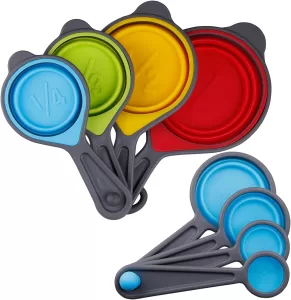
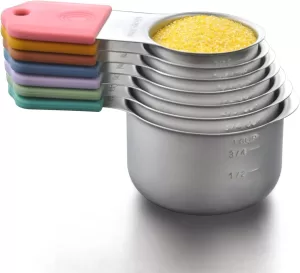
Liquid volume meter
The measurement of liquids in recipes also tends to follow the standard of volume rather than weight. This jug makes it much easier to measure liquids in “cups” and fractions as well as in milliliters or oz.
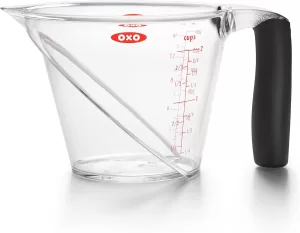
OXO Good Grips 2-Cup Angled Measuring Cup
Scales
It’s not mandatory to have a scale at first, but when you’re producing a more refined confectionery or working with breads, a scale is a must. And, in general, they’re not expensive.
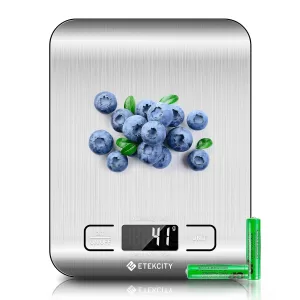
Digital Kitchen Scale 304 Stainless Steel
Thermometer
Little used in recipes in general, much used in confectionery. The stick version is better for measuring the temperature inside food and the infrared version is better for measuring surface temperature.
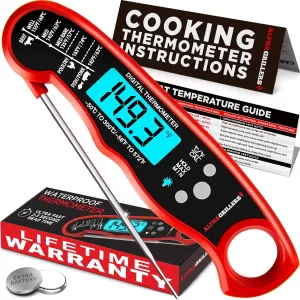
Instant Read Meat Thermometer for Grill and Cooking
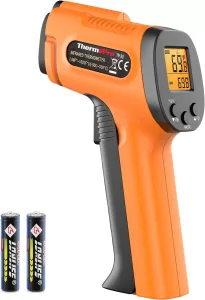
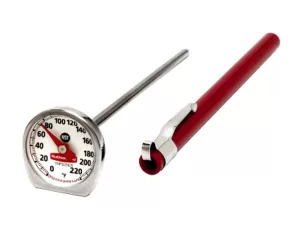
Food-Meat Instant Read Thermometer
“We participate in the Amazon Associates Program, an intermediary service between Amazon and customers, which remunerates the inclusion of links to the Amazon site and affiliate sites.”